Are All on X Implants for you?
Fixed full-arch implants at McCloy Dental — planned in 3D, placed with surgical guides, and built on a bite we've assessed properly. Right here on Morayfield Road.
If you're managing a failing set of teeth, a mouth full of patch-ups, or a denture that moves when you eat, a full-arch implant bridge replaces the whole arch on four to six implants. It doesn't come out. You clean it like teeth.
Book an Implant Assessment or Call 07 5495 7988
You’ve Probably Been Putting This Off
Most people who come to us for full-arch implants have been living with the problem for years. Teeth that break one at a time. A partial denture that's become a full denture. Chewing on one side. Choosing soft food at restaurants. Smiling with a closed mouth in photos.
There's often some embarrassment attached to it, and a fair bit of it isn't deserved — teeth fail for reasons that have nothing to do with how hard you tried. Genetics, medications, dry mouth, an old accident, grinding, a decade of putting everyone else's needs first.
We're not going to lecture you about it. We're going to look at what's actually there and tell you honestly what your options are, including the ones that cost less than this one.
How it works.
A full-arch implant bridge replaces every tooth in an upper or lower jaw using a small number of implants — usually four to six — as anchors. The bridge is fixed to those implants. You don't take it out at night.
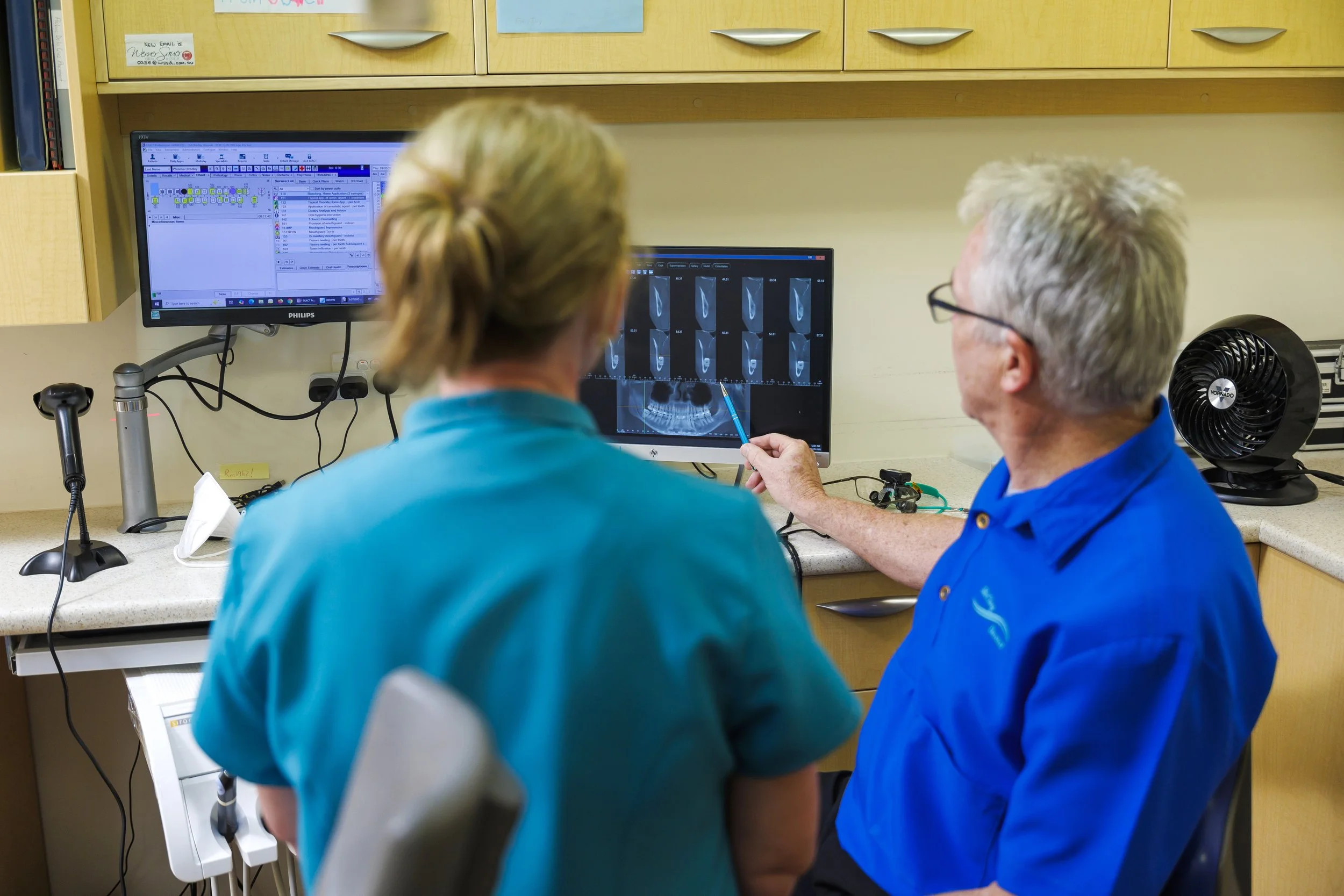
Because the implants can be angled to use the bone you already have, many people who've been told they "don't have enough bone for implants" can still be candidates. That's assessed on your CBCT scan, not on a guess.
The stages:
Assessment — CBCT scan, photos, models, a proper look at your bite and jaw joints, and a review of your medical history.
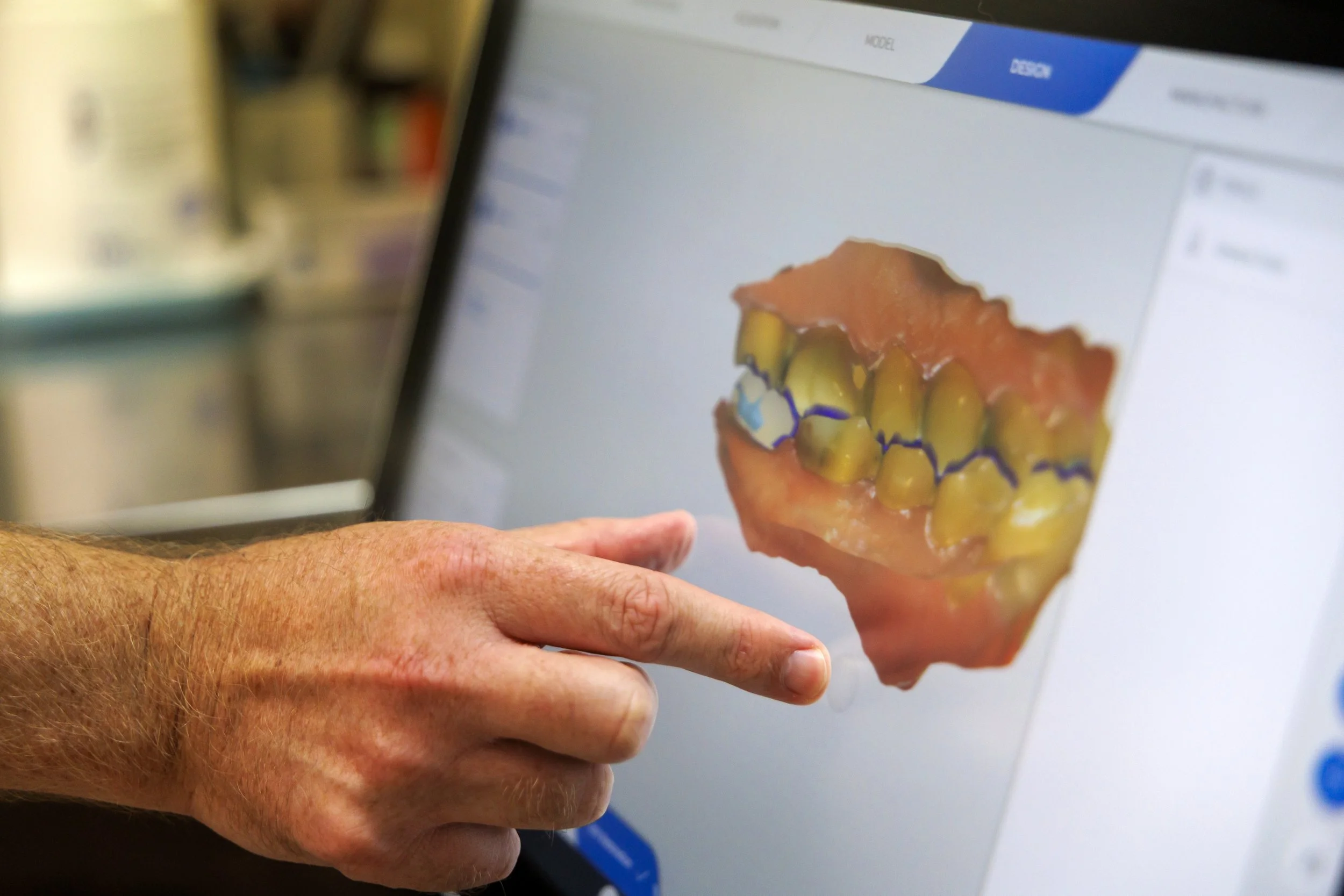
Planning — Your implant positions are planned digitally against the bone, the nerve, and where the teeth need to sit for you to chew and speak properly.
Surgery day — Remaining teeth are removed if needed, implants are placed, and a fixed temporary bridge is fitted the same day / a healing period follows,
Healing — Months genearlly, while the implants integrate with the bone. You're reviewed regularly through this period.
Final bridge — Your definitive bridge is fitted.
Maintenance — Ongoing reviews and professional cleaning. This is a long-term restoration, not a set-and-forget one.
Timeframes and staging vary between patients depending on bone quality, healing, and what's found at assessment.
What it costs.
Full-arch implant treatment is a significant investment, and we'd rather you heard a real number from us than a marketing number from an ad.
Cost depends on the number of implants, the bridge material, whether extractions or bone grafting are needed, and whether you're treating one arch or two. After your assessment you'll get a written treatment plan with itemised item numbers you can take to your health fund.
Health fund rebates may apply depending on your level of cover and annual limits.
Payment plans are available.
Early release of superannuation on compassionate grounds is available to some patients through strict criteria. Not everyone is eligible.
Fees quoted after clinical assessment. Payment plans are provided by third parties and subject to their approval criteria, terms and fees.

FAQ’s
Am I too old for this? Age itself isn't the barrier. General health, medications, healing capacity and bone quality matter far more than the number on your birth certificate. We assess all of it.
I've been told I don't have enough bone. Common, and often not the end of the story. Angled implant placement can use bone that a conventional approach can't reach, and grafting is an option in some cases. Your CBCT scan will answer this properly.
Will I be without teeth at any point? Generally, no. You will generally have temporaries, unless it really isn’t suitable. We are happy to discuss based on your individual situation.
Does it hurt? It's surgery, so there's post-operative discomfort — usually swelling and soreness for several days, managed with medication. We'll give you written aftercare instructions and a number to call. Most people describe it as more manageable than they expected, but it varies and we won't promise you a pain-free week.
How long do they last? Implants can last decades with good maintenance, though the bridge on top may need repair or replacement over that time. Smoking, uncontrolled diabetes, grinding and poor cleaning all shorten the life of the work. Longevity varies between individuals.
How do I clean them? Daily cleaning under the bridge with the tools we give you, plus professional maintenance appointments. It's not difficult, but it isn't optional — peri-implantitis is the main long-term risk and it's largely preventable.
Can I do just the top? Yes. Single-arch treatment is common, and the opposing arch is assessed as part of planning either way.
Do I need a referral? No.
What if something goes wrong? You call us and we see you. We're 10 minutes up the road, and we're not going anywhere.